
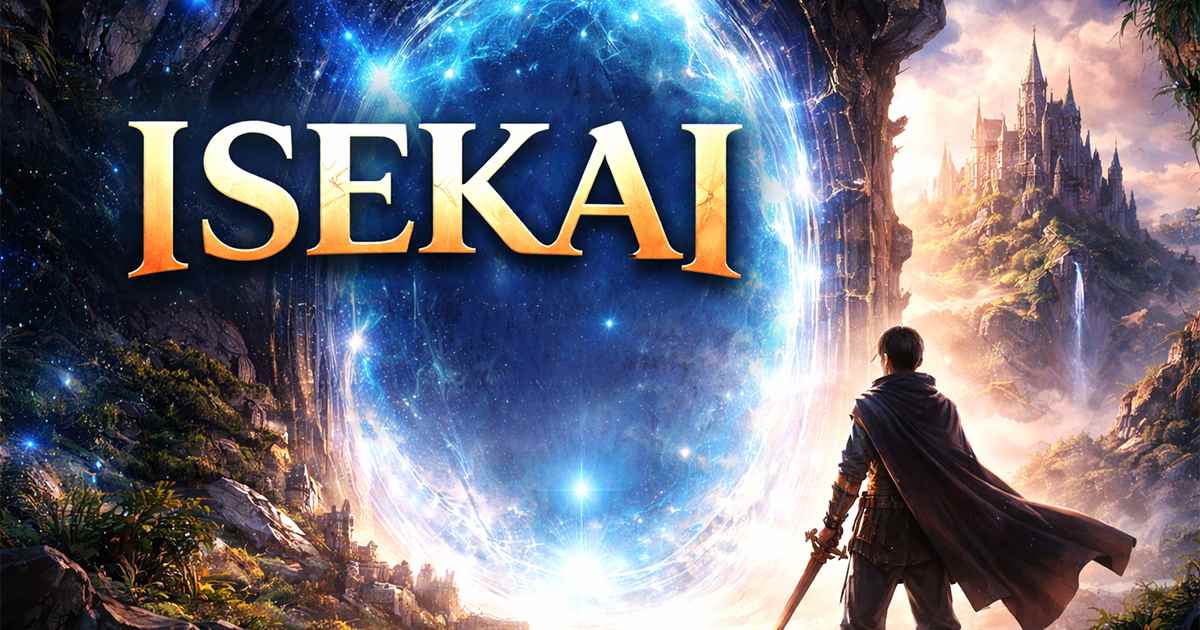
Isekai refers to a narrative genre where a character is transported, reincarnated, or otherwise displaced into another world governed by different rules. This shift creates a break from familiar reality and introduces new systems, stakes, and forms of progression.
For a structured breakdown of worldbuilding in isekai, see this detailed approach to worldbuilding in light novels.
This page explores isekai from a structural perspective: how these worlds are built, how characters evolve within them, and what makes the genre consistent and readable across different formats such as light novels, manga, and anime.
What Is Isekai
Isekai is built on a transition between two realities. A character leaves their original world and enters another environment with its own logic. This transition may be sudden or progressive, but it always creates a clear distinction between “before” and “after.”
The genre focuses on adaptation. Characters must understand new rules, navigate unfamiliar systems, and redefine their role within a world that does not follow the same structure as their origin.
Core Elements of Isekai Stories
Transition Between Worlds
The transition is the foundation of isekai. It can take the form of reincarnation, summoning, or unexplained displacement. What matters is not the method itself, but the structural rupture it creates.
Rules and Systems
Every isekai world operates on defined systems. These may include magic, social hierarchies, economic structures, or power scaling. The internal logic must remain consistent for the narrative to remain readable.
Character Progression
Progression is central to the genre. Characters often evolve through measurable systems, training, or experience. This progression provides structure and direction to the story.
Worldbuilding in Isekai
Worldbuilding defines how the new reality functions. It includes geography, power systems, cultural norms, and long-term conflicts. A coherent world allows readers to understand cause and effect within the story.
Strong isekai worldbuilding balances complexity and clarity. Too many rules can create confusion, while insufficient structure weakens immersion.
Power Systems and Internal Logic
Power systems in isekai often rely on structured mechanics such as levels, abilities, or inherited traits. These systems must follow clear rules.
The key is consistency. If the rules change without explanation, the narrative loses credibility. A well-defined system supports both progression and conflict.
Character Adaptation and Identity
Characters in isekai must adapt to a new environment. This includes learning new rules, understanding power structures, and redefining their identity.
The contrast between the original world and the new one often reveals strengths, weaknesses, and motivations that were not visible before the transition.
Isekai in Light Novels, Manga, and Anime
Isekai is strongly associated with light novels, where structured progression and worldbuilding are central. Manga and anime adaptations often emphasize visual representation and pacing, but rely on the same underlying principles.
Each format presents the same core elements differently, while maintaining the internal logic of the genre.
Common Structures in Isekai Narratives
Most isekai stories follow recognizable patterns:
- Entry into a new world
- Discovery of rules and systems
- Initial struggle and adaptation
- Progressive growth
- Confrontation with larger conflicts
These structures provide a framework that helps maintain clarity and engagement.
Why Isekai Works as a Genre
Isekai creates a controlled environment for exploring change. By placing a character in a new world, the story isolates variables and focuses on progression, conflict, and discovery.
The genre remains effective because it combines structure with flexibility. It allows complex systems while keeping a clear narrative direction.
Conclusion
Isekai is not defined only by the idea of another world, but by the systems that govern it and the progression that shapes the characters within it. A strong isekai narrative depends on internal logic, coherent worldbuilding, and structured development.
Understanding these elements allows both readers and writers to approach the genre with clarity and consistency. For a deeper exploration of isekai structures and narrative systems, you can explore additional resources here.